
Hand Positions for Steering Wheel: 10 and 2 vs 9 and 3
Discover why driving experts now recommend 9 and 3 over the old 10 and 2 steering position, and how it improves safety, control, and comfort.
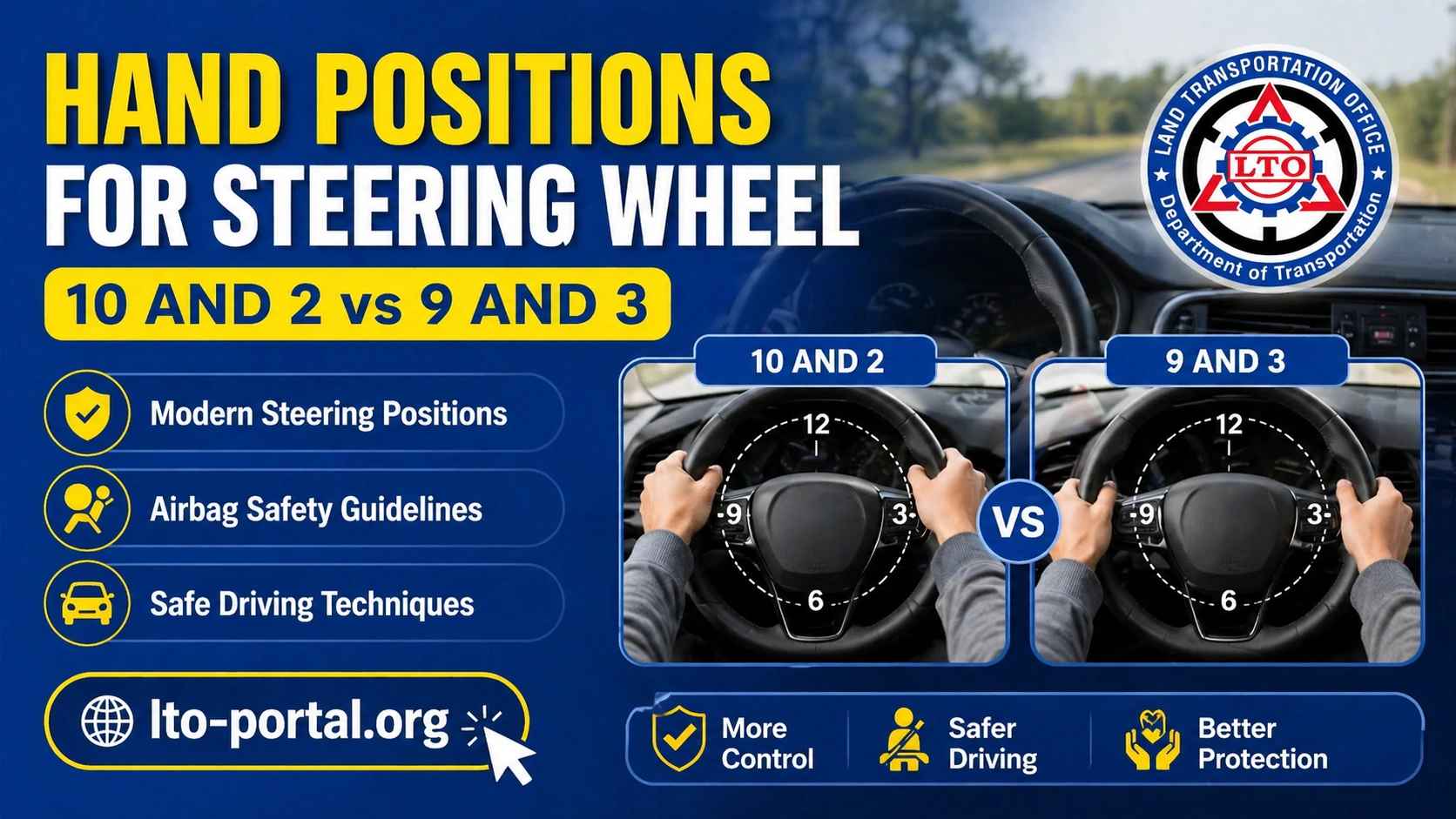
Driving looks simple, but small habits can change how safe and comfortable you feel on the road. One of the most important basics is how you hold the steering wheel. Many people learned the old 10 and 2 position. Today, experts often recommend 9 and 3 instead.
In this guide, you will understand both methods, why the advice changed, and which position works best in real driving situations.
What Are Hand Positions for Steering Wheel?
Hand positions for steering wheel means where you place your hands while driving. Think of the steering wheel like a clock:
- 10 and 2 means your left hand is at 10 o’clock and your right hand is at 2 o’clock
- 9 and 3 means your hands are placed directly across from each other
These positions help you control the car, react quickly, and stay balanced while turning.
The Traditional Method: 10 and 2
For many years, driving schools taught 10 and 2 as the standard.
Why was it popular
- Gives a wide grip on the wheel
- Feels natural for beginners
- Helps with large turns
Problems with 10 and 2
Modern cars are not the same as older ones. Today, most vehicles have airbags in the steering wheel.
When the airbag opens during a crash, it comes out fast and with strong force. If your hands are at 10 and 2, they are closer to the airbag. This can push your hands into your face or chest and cause injuries.
The Modern Method: 9 and 3
Most driving experts now suggest 9 and 3 as the safer choice.
Why 9 and 3 is recommended
- Keeps your hands away from the airbag zone
- Gives better control of the wheel
- Reduces shoulder and arm fatigue
- Makes steering smoother, especially at high speed
With 9 and 3, your arms stay more relaxed and balanced. This helps you stay in control during sudden movements.
10 and 2 vs 9 and 3: Key Differences
Safety
- 10 and 2 increases risk during airbag deployment
- 9 and 3 reduces injury risk
Control
- 10 and 2 is good for wide turns
- 9 and 3 offers better precision and quick reactions
Comfort
- 10 and 2 can strain your shoulders over time
- 9 and 3 feels more natural for long drives
Modern Driving
- 10 and 2 fits older driving styles
- 9 and 3 matches modern vehicle design and safety systems
What Driving Experts Recommend
Most driving instructors and safety organizations now support 9 and 3. It aligns with how modern cars are built and how airbags function.
It also improves your ability to:
- Keep steady control on highways
- Handle sudden turns
- Maintain proper posture
When Should You Use Each Position
Use 9 and 3 for:
- Daily driving
- Highway travel
- City traffic
- Long trips
Use 10 and 2 only if:
- You are learning basic steering control
- You are driving an older vehicle without airbags
Even then, switching to 9 and 3 is a smart move as soon as you are comfortable.
Common Mistakes to Avoid
- Driving with one hand only
- Holding the wheel too tightly
- Placing hands too low on the wheel
- Crossing arms too much while turning
These habits reduce control and increase risk, especially in emergencies.
Simple Tip for Better Control
Keep your hands steady at 9 and 3 and use smooth movements while turning. Do not jerk the wheel. Small, controlled actions make a big difference in safety.
Final Thoughts
Hand positions for steering wheel may seem like a small detail, but they play a big role in safe driving. While 10 and 2 was useful in the past, 9 and 3 is better suited for today’s cars.
If you want more control, comfort, and safety, make 9 and 3 your default habit every time you drive.